The order of the groups
We divide products into groups in the order readers look for them, setting criteria such as area of use, skin type, or product series into an order the catalog follows from start to finish.
The order of the groups
We divide products into groups in the order readers look for them, setting criteria such as area of use, skin type, or product series into an order the catalog follows from start to finish.

A recurring layout
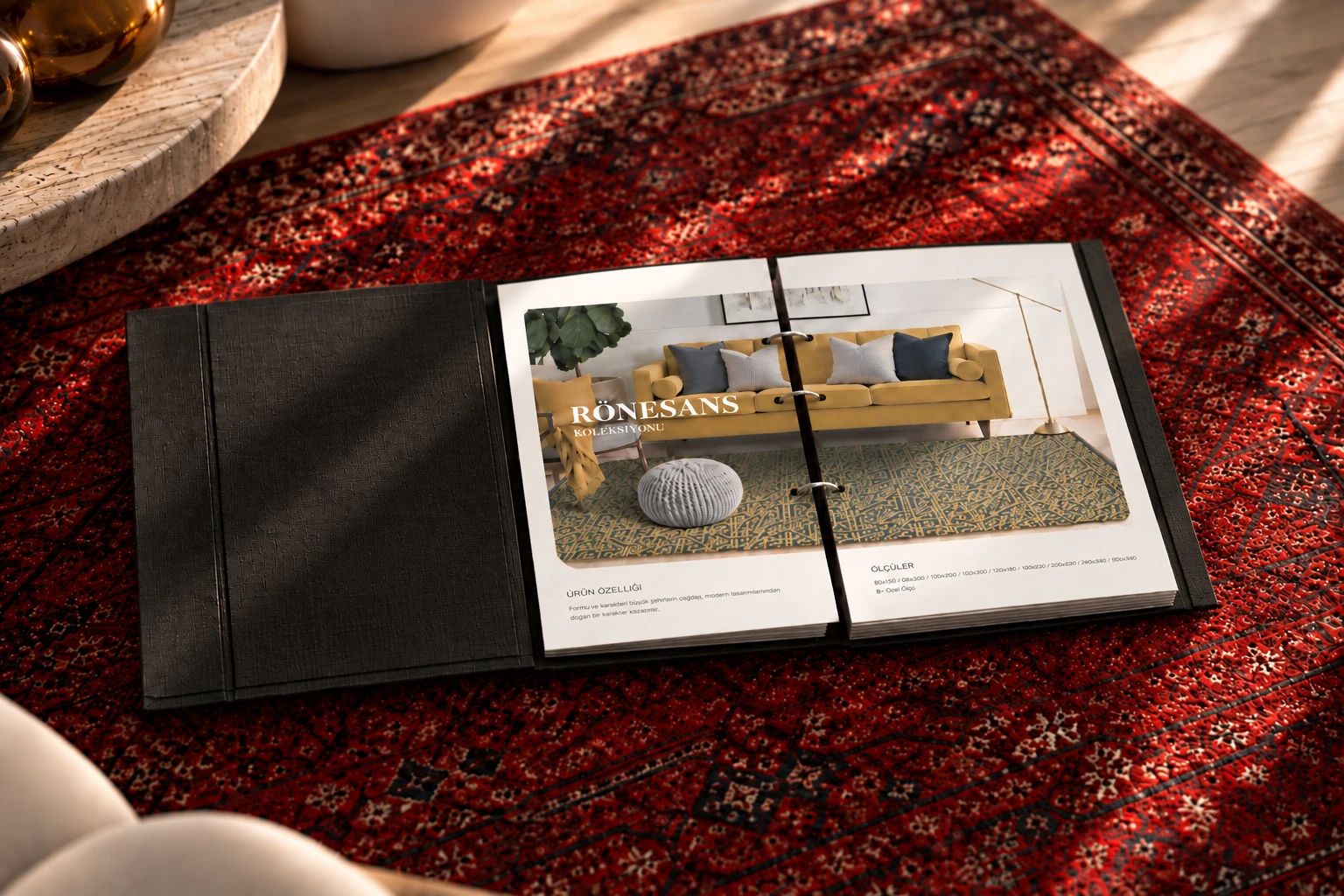
We keep the product name, image, key ingredients, and technical information in the same place on every page; from the second page on, readers find what they need without searching for it.

A place for technical information
Instead of squeezing the ingredient list, dimensions, and usage information between passages of product story, we gather them in tables and icons; story and technical information share the page without interrupting each other.
We build the page layout as a template system that can grow with the product family. A new series slots into the same layout, and the same content moves through this system from the printed catalog to PDF and to the product pages on your website.
Yes. Printing is done at our partner printer; we choose paper, binding, and special finishes together, check the proof, and follow the process through to delivery. The responsibility for the job is ours.
Yes. From the same content we prepare a PDF for reading on screen, a lighter version that can be shared by email, or an e-catalog linked to the product pages on your website.
Yes. We take the product information from you, write the catalog copy, and turn technical information into tables that can be compared. If an English version or another language is needed, we prepare the translation and typesetting in the same layout.
Yes. We adapt the catalog’s layout to a brochure, product sheet, or flyer. For Derma Nepenthe, the catalog explains each product in detail, while the flyer lets readers choose quickly by skin type.
New products are added to the same template system. We rework only the pages that change and, depending on need, prepare an updated PDF or a new print run.
Yes. We first look at which sections of the current catalog are actually used and what information the sales team and customers look for; we set the scope of the redesign accordingly.